

Project Overview
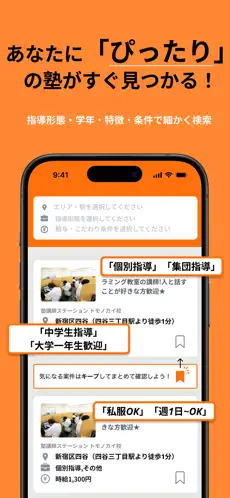
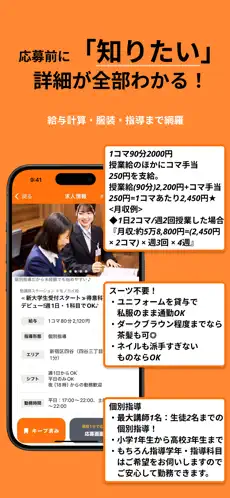
This is a project in which we released a mobile app version of "Juku Koshi Station"—a cram-school instructor job service previously offered only on the web—simultaneously on iOS and Android through cross-platform development. By combining cost optimization for outsourcing with training the client's in-house engineers, who were tackling a technical domain new to them, we achieved goals that are normally a trade-off: launching both the product and the in-house development team at the same time.
In this article, we spoke with the person who led the project about the background behind their decision to work with DVER and their impressions of how the project actually unfolded.
Challenge
They needed to simultaneously achieve mobile app development, in-house engineer capability building, and cost reduction—all on a tight schedule.
Solution
Cross-platform development to release iOS and Android simultaneously. In parallel,
trained in-house engineers through OJT (on-the-job training).
Results
- Met all QCD targets and launched on iOS and Android simultaneously at below-market cost
- Trained every in-house engineer to a self-sufficient level and prepared training materials
- Delivered both an MVP and an in-house development team in a single engagement
Tell us about your business
── First, could you tell us about your company's business?
Under the theme of "redesigning education," we offer a wide range of services in the education domain, including a job site for cram-school instructors, private tutor placement, and running after-school self-study rooms and events. We also work in niche areas such as new ventures and services for international students.
Background to the Project
── Could you tell us about the background that led to this project?
The cram-school instructor job site "Juku Koshi Station" was originally a web-only service. As Google's advertising costs rose, we decided to shift our strategy toward social media marketing. Because we judged that a mobile app was a better fit for capturing traffic from social media, an app development project was launched as part of building out our platform.
What the Project Aimed to Achieve
── How were the success criteria set?
We organized them around QCD.
- Quality: Implement the minimum set of features from the web version as an MVP, at a level users could use without any sense of awkwardness.
- Cost: Come in below the typical vendor market rate.
- Delivery: Requirements definition in January–February 2025, development starting in April–May, and store launch from late January to early February 2026.
Since it was a tight schedule to design, develop, and release the app in about a year, honestly, we were quite anxious about whether we would make the deadline.
Actually Running the Project
── How did it go once you actually got started?
To put the conclusion first, we achieved all of QCD.
Because development went so smoothly, we were also able to spend time on training, acceptance testing, and improvements to raise quality. There was no major divergence from the requirements definition, and being able to spend time on fine-tuning details and considering additional features was truly significant.
When you outsource a system, the common impression is that what first comes back is far from your expectations, but this time there was almost none of that—it was a pleasant surprise, in the best sense.

On Engineer Training Through OJT
── Your in-house engineers also participated through OJT. How satisfied were you?
In short, we were "extremely satisfied." There were two main things we were grateful for.
1. Training
This technology stack was something our engineers were touching for the first time, but you trained every member to a level where they could write code themselves while still meeting the deadline. On top of that, you even prepared training materials for subsequent members, written so that even someone with no prior knowledge could understand—we were truly grateful for that.
2. Team Management
What comes up every time in our 1-on-1s with our engineers is the sentiment, "It went smoothly thanks to DVER." Every member said the same things: "You set everything up, so all we had to do was implement it as directed," and "Even with a language I'd never used, I could make progress." Creating an environment where any question got an immediate answer was, we recognize, a major achievement on the management side as well.
Looking Back on the Project and Looking Ahead
── Looking back on the whole project, what are your thoughts on the future?
You moved everything forward to our satisfaction across all of QCD. In addition to your speedy responses, what stood out to us in particular was the attentive support—proactive proposals that anticipated our intentions, and even preparing a checklist for the app store launch.
Going forward, we plan to continue operating and maintaining this app and expanding its features, while also consulting with you about bringing other in-house SaaS development in-house.
To Companies Considering This
── Finally, do you have a word for companies considering a development partner?
Because they understand what the client wants to do and their longer-term vision, and drive the project and make proposals accordingly, I think they're a partner that companies looking to build systems from here on can trust. Why not reach out to them once?